Complete Guide to Bariatric Surgery
Bariatric surgery, also known as weight loss surgery, represents a life-changing solution for individuals struggling with severe obesity and related health conditions. Unlike diet and exercise alone, which often fail to produce lasting results for those with extreme obesity, bariatric surgery works by reducing stomach capacity and, in some procedures, rerouting the digestive system. This comprehensive guide will help you understand the different types of procedures available, the recovery process, and how bariatric surgery can transform not just your weight, but your entire life and health outcomes.
Understanding Bariatric Surgery and Candidacy
Bariatric surgery is recommended for individuals with a BMI of 40 or higher, or a BMI of 35 or higher with obesity-related medical conditions such as type 2 diabetes, sleep apnea, or hypertension. The procedure offers benefits that extend far beyond the number on the scale—patients often experience remission of type 2 diabetes, resolution of sleep apnea, improved heart health, and enhanced overall quality of life.
The effectiveness is remarkable: patients lose 50% or more of their excess body weight and maintain this weight loss long-term. Beyond weight loss, patients experience fewer required medications, increased energy levels, improved mobility, and better mental health. Studies have shown that weight loss surgery reduces the risk of death from heart disease by 40%, from diabetes by 92%, and from cancer by 60%.
Types of Bariatric Procedures
Modern bariatric surgery offers several proven techniques, each with unique advantages suited to different patient needs:
- Gastric Sleeve (Sleeve Gastrectomy)
This is the most commonly performed bariatric procedure worldwide. The surgeon removes approximately 80% of the stomach along its greater curve, leaving a long, tube-shaped pouch resembling a banana.
How It Works:
- Reduces stomach capacity from 1-1.5 liters to about 150-200 ml
- Reduces production of ghrelin, the hunger-stimulating hormone
- No rerouting of intestines required
Advantages:
- Simpler procedure with shorter operative time
- No foreign objects placed in the body
- No changes to intestinal anatomy
- Lower risk of nutritional deficiencies than bypass procedures
- Excellent weight loss results: 60-70% of excess weight loss in 12-18 months
- Gastric Bypass (Roux-en-Y)
This procedure has been performed successfully for decades and remains highly effective. The surgeon creates a small pouch from the top portion of the stomach and connects it directly to the small intestine, bypassing most of the stomach and part of the intestines.
How It Works:
- Creates a small stomach pouch of about 30 ml capacity
- Bypasses 40-60% of the small intestine
- Reduces both food intake and calorie absorption
Advantages:
- Achieves faster initial weight loss: 60-80% of excess weight in 12-18 months
- Excellent long-term weight loss maintenance
- Additional metabolic improvements beyond restriction alone
- Adjustable Gastric Band
This reversible procedure places an adjustable silicone band around the upper stomach, creating a small pouch.
Advantages:
- Reversible procedure
- No permanent changes to anatomy
- Minimal invasiveness
- Quick recovery—1-2 weeks return to work
- Adjustable—band tightness can be modified over time
- Biliopancreatic Diversion with Duodenal Switch (BPD/DS) and SADI-S
These advanced procedures combine sleeve gastrectomy with intestinal bypass. The SADI-S (Single Anastomosis Duodeno-Ileal Bypass with Sleeve Gastrectomy) is the newer, simpler version.
Advantages:
- Most dramatic weight loss results
- Excellent for super-obese patients
- Significant metabolic improvements
Recovery Timeline: What to Expect
Understanding the recovery process helps you prepare for a smooth transition:
Immediately After Surgery (Day 1-2)
- Hospital stay: 1-2 days
- IV fluids provided for hydration
- Pain management with prescribed medications
- Early mobilization—walking encouraged to prevent blood clots
- Clear liquids only when approved by the surgeon
Weeks 1-2: Early Recovery
- Continue clear liquids and broths
- Most patients return to desk jobs within 7-10 days
- Gradually increase walking and light activities
- Pain management continues but diminishes significantly
- Follow strict hydration—sip water regularly throughout the day
Weeks 3-4: Diet Progression
- Introduction of pureed and soft foods—yogurt, smooth soups, well-cooked vegetables
- Protein intake becomes critical for healing and metabolism
- Return to work possible for most desk-based jobs
- Light household activities permitted
- Avoid lifting anything heavier than 6-9 kg
Weeks 4-6: Increasing Activity
- Gradually reintroduce soft solids and well-cooked proteins
- Moderate activities resume—long walks, light cycling
- Most patients return to normal routines by 6-8 weeks
- Energy levels rise noticeably
- Weight loss becomes visible and motivating
3-6 Months: Long-Term Adjustment
- Body fully adapts to digestive changes
- Steady weight loss continues—often most significant during this period
- Normal diet gradually resumed (avoiding high-sugar, high-fat, and heavy foods)
- Regular exercise routine becomes sustainable
- Most patients can resume all normal activities and light workouts
Complete Recovery Timeline: While patients feel significantly better within 2-3 weeks, complete internal healing and tissue recovery may take up to 3 months.
Return to Work and Activities
Desk Jobs: 7-10 days after surgery
Physical Jobs: 2-3 weeks, depending on intensity
Heavy Lifting: Avoid for minimum 6 weeks
Exercise: Light activities at 3-4 weeks, moderate exercise at 6-8 weeks, full exercise at 12 weeks
Driving: Avoid for at least one week post-surgery
Post-Surgery Diet Progression
Successful bariatric surgery requires strict dietary adherence:
Phase 1 (Days 1-4): Clear liquids only
Phase 2 (Weeks 2-3): Full liquids and pureed foods
Phase 3 (Weeks 3-4): Soft foods in small portions
Phase 4 (Week 5 onwards): Gradual return to normal diet with portion control
Lifelong dietary guidelines include:
- Eating small portions (about half to one cup per meal)
- Prioritizing protein at every meal
- Avoiding sugary, fatty, and heavily processed foods
- Staying hydrated—at least 2-3 liters daily
- Taking prescribed vitamin and mineral supplements lifelong (especially with bypass procedures)
Cost Advantages: International Comparison
Bariatric surgery in India offers exceptional value without compromising quality:
- Cost difference: Bariatric surgery in India costs 75-80% less than similar procedures in the United States or Western Europe
- Quality equivalence: Indian hospitals use identical advanced technologies and techniques as Western facilities
- Faster access: Almost zero wait times mean quicker treatment and faster results
Why Choose Massvaa Care for Your Bariatric Surgery
Expert Surgical Team: Massvaa Care partners with India’s leading bariatric surgeons who are internationally trained and experienced in all modern surgical techniques, from gastric sleeve to complex duodenal switch procedures. Our partner surgeons have performed thousands of successful bariatric surgeries with exceptional complication rates and long-term success outcomes.
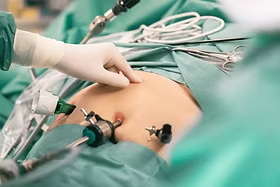
Advanced Medical Facilities: All our partner hospitals are equipped with state-of-the-art laparoscopic and robotic equipment, meeting international standards. This ensures minimally invasive techniques that reduce recovery time and complications while maximizing results.
Comprehensive Medical Tourism Support: From pre-surgery consultations via telemedicine to airport pickup, accommodation arrangement, post-operative care coordination, and follow-up support, Massvaa Care handles every detail. Our multilingual coordinators ensure clear communication throughout your medical journey.
Customized Treatment Plans: Each patient receives an individualized assessment to determine the most suitable bariatric procedure based on BMI, health conditions, lifestyle, and weight loss goals. Our nutritionists and surgeons work together to create a comprehensive post-surgery support plan.
Affordable Excellence: By leveraging India’s cost-effective healthcare delivery without sacrificing quality, we make world-class bariatric surgery accessible to international patients. Our transparent pricing includes all pre- and post-operative care.
Lifelong Support Network: Post-surgery success requires ongoing guidance. Massvaa Care provides access to nutritionists, fitness coaches, and psychological support to ensure your long-term success.
Making Your Decision
Bariatric surgery represents a powerful tool for transforming your health and life. The choice between sleeve gastrectomy, gastric bypass, gastric band, or duodenal switch depends on your specific circumstances, and our surgeons will guide you to the optimal procedure.
Success requires commitment to dietary changes, regular exercise, and lifestyle modifications—but the rewards are extraordinary. Patients report not just significant weight loss, but freedom from obesity-related diseases, renewed energy, improved mobility, and a completely transformed quality of life.
Take the Next Step
Don’t let obesity limit your potential any longer. Contact Massvaa Care today for a free consultation with our bariatric specialists. We’ll discuss which procedure is right for you and create a comprehensive plan for your transformation. Your healthier, happier future starts here.